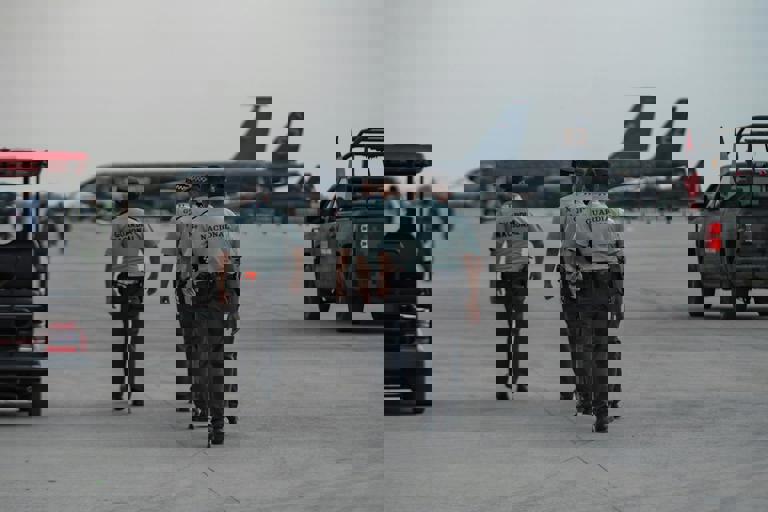
Authorities at Vancouver International Airport (YVR) halted a couple this week after security screening revealed an astonishing discovery: more than half a million dollars in cash was found tucked away in their luggage. The incident unfolded during a routine baggage inspection, leading airport officials to immediately notify the Canada Border Services Agency (CBSA). The couple, whose identities have not been released, was stopped before boarding an international flight.
The CBSA confirmed that the cash—consisting mostly of $100 and $50 bills—was meticulously concealed in multiple suitcases. Officers found the money packed between layers of clothing, inside shoe boxes, and hidden in false-bottom compartments, indicating a deliberate attempt to evade detection. Under Canadian law, travelers must declare when they are carrying $10,000 or more in currency when entering or leaving the country.
Customs officers were quick to launch an inquiry into the source and intent behind the large sum of money. According to CBSA spokesperson Amy Pruden, "Our mandate is to safeguard Canada's borders, and this includes enforcing laws related to the cross-border movement of currency." She added that the couple had failed to declare the cash during their customs interview, arousing further suspicion among officials.
In Canada, failing to declare large amounts of money can result in the seizure of funds and, potentially, criminal charges if the money is linked to illicit activities. According to the Proceeds of Crime (Money Laundering) and Terrorist Financing Act, authorities are empowered to hold the funds while determining their legality. Last year alone, CBSA reported seizing more than $9 million in undeclared currency at Canadian airports.
Experts in financial crime note that cases like this are not uncommon, especially at international airports where money laundering efforts are often intercepted. "Large movements of unreported cash raise serious concerns about the proceeds’ origin," said financial analyst Tamara Greenstein. She points out that cash smuggling is a frequent method used by individuals attempting to circumvent the formal banking system and evade regulatory oversight.
The discovery has sparked a broader discussion about the effectiveness of security screening measures in detecting financial crime at borders. Critics have sometimes argued that existing regulations may not be sufficiently robust to combat increasingly sophisticated concealment techniques. However, supporters say that the swift response by YVR security and CBSA demonstrates the critical importance of thorough screening processes in protecting Canada's financial integrity.
The couple in question is currently cooperating with authorities as the investigation proceeds. CBSA sources indicate that, as of now, there is no evidence linking them to organized crime, but the origin of the cash remains unexplained. Investigators are reportedly working with both domestic and international financial intelligence units to trace the funds and determine whether any criminal activity is involved.
Public reaction to the news has ranged from shock at the enormity of the seizure to curiosity about the motives behind such a large undeclared cash transfer. The case remains ongoing, and officers stress that findings will be shared with the public once the investigation concludes. Authorities remind all travelers to be aware of legal reporting requirements, emphasizing that compliance is vital not only for legal protection but also for national security.